EURALEX Talks is a series of online webinars featuring invited experts in the field of lexicography. These sessions, which are free and open to everyone, explore a wide variety of topics related to language and lexicography. Each talk lasts approximately 40 minutes, followed by an interactive session for questions and discussion.
Past Talks
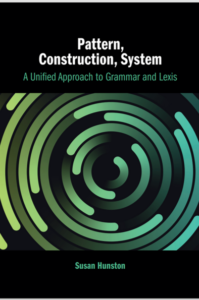
Susan Hunston (29 April 2026)
Pattern and Construction in Learner Dictionaries
This talk is based on a Leverhulme-funded project (EM-2022-022) seeking to unify three approaches to grammar and lexis in English: Pattern Grammar, Construction Grammar, and Systemic Functional Grammar. These represent three approaches to the description of grammar and lexis, from the point of view of observation, cognition, and social semiotic respectively. The talk first explores the relationship between patterns and constructions, with examples from the 50 verb complementation patterns analysed in the project. It discusses how a focus on construction might influence the format of learner dictionaries. The talk then considers the relationship between constructions and systemic networks, speculating on potential resources for learners based on meaning networks. Examples are taken from the 10 semantic fields discussed in the project.
Biodata
Susan Hunston is Professor of English Language at the University of Birmingham, UK. She specialises in corpus linguistics and discourse analysis and has published books and articles on topics such as evaluative language, academic discourse, the use of corpora to describe the grammar and lexis of English, and the interface between corpus and discourse studies. Her most recent book is Pattern, Construction, System: a unified approach to grammar and lexis (2025 Cambridge University Press).
Marco Passarotti (21 January 2026)
LiLa (and LiITA) and Lexicography. Exploiting the Interaction between Lexical (and Textual) Resources
In this presentation, I will address the topic of interoperability among language resources, focusing on the use case of the LiLa Knowledge Base for Latin resources. Additionally, the LiITA Knowledge Base for Italian will be introduced. After outlining the fundamental principles of the Linked Data paradigm, which underpins both LiLa and LiITA, I will describe the architecture of the Knowledge Base. Subsequently, I will focus on the modeling of various lexical and textual resources currently interconnected through LiLa. Finally, I will showcase a few online services for querying the Knowledge Base, with particular emphasis on use cases that cater to the needs of lexicographic work.
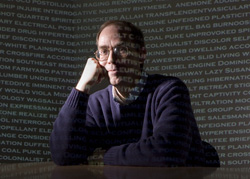
Mark Davies (16 April 2025)
I recently finished a large-scale investigation (https://www.english-corpora.
Biodata
Mark Davies is Professor Emeritus of Linguistics at Brigham Young University in Provo, Utah, USA. He is the author of six books and 90 articles; he has been the keynote speaker at many international conferences; and he is the recipient of several large research grants. All of these research activities deal with creating corpora and using corpus data for research and teaching, especially in terms of genre-based, historical, and dialectal variation in English. Perhaps most importantly, he is the (sole) creator of most of the corpora from English-Corpora.org, which are probably the most widely used corpora for teaching, learning, and research.

Pamela Faber (28 January 2025)
The Language of Love Fraud: Frames of Deception
The language of love fraud is a unique example of an online linguistic deception. Using a fabricated identity, the fraudster creates the illusion of a romantic relationship between himself and the victim, solely through language. This deception is often successful because of the fraudster’s lexical choices (soulmate, cherish, adore, sacred vow, etc.) which override his flawed syntax and activate a frame of romantic love in her mind.
Biodata
Pamela Faber is Professor Emeritus in Translation and Interpreting at the University of Granada (Spain). She is the founder of the LexiCon research group, with whom she has carried out various nationally-funded research projects on Frame-Based Terminology, the approach to terminology that she created and developed. One of the results of these projects is EcoLexicon (ecolexicon.ugr.es), a terminological knowledge base on environmental science. She has more than 150 articles, book chapters, and books, which have inspired researchers throughout the world to explore specialized knowledge from a frame-based perspective.